
The Importance of Play for Kids and Teens
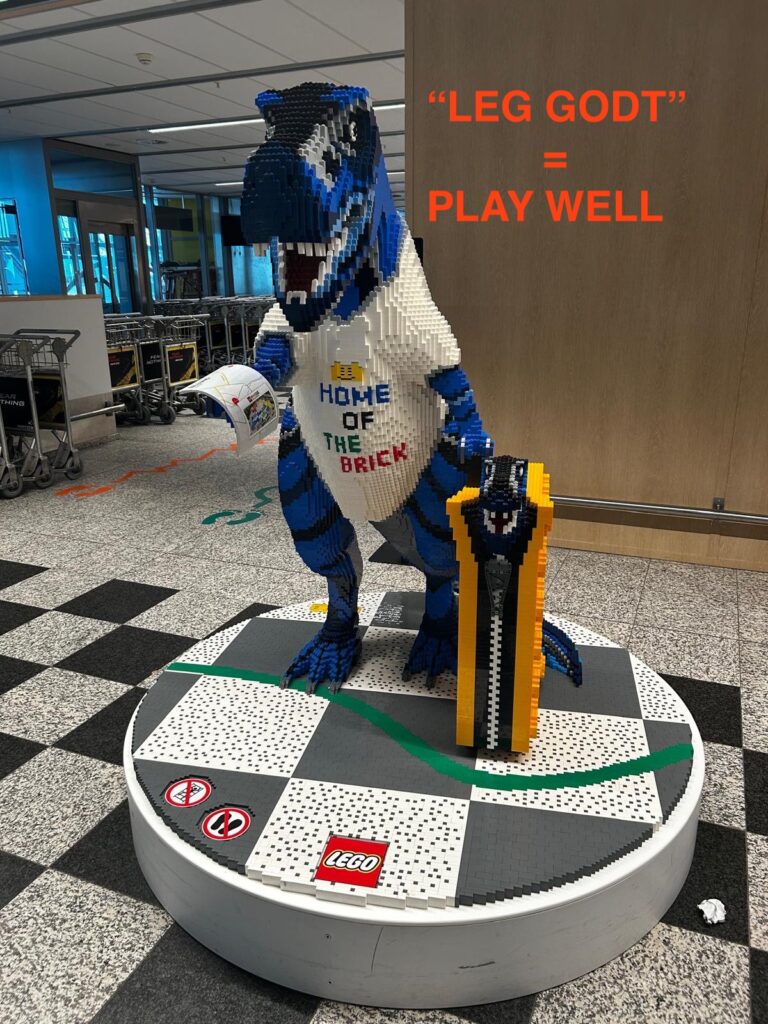
I was just in Billund, Denmark (the founding city of Lego) and learned that the name LEGO, originated in 1934 and comes from the Danish words ‘leg godt,’ which mean “play well”.
What a beautiful message that we need to heed more than ever, as PLAY is necessary for healthy development.
Not learn more, achieve more or win more, but simply PLAY WELL.
Because for our kids and teens, playing well is essential, especially in this digital era, where some young children are receiving iPads as a baptism present.
As parents, we all want our kids to thrive. We sign them up for swimming lessons, music classes, sports, tutoring, and extracurricular activities because we want them to develop confidence, keep up with their peers and be prepared for their future.
Somewhere along the way, many families begin to believe that play is what children do after the important things are finished.
Play Is Essential for Healthy Development
However, psychologist and author, Dr. Gordon Neufeld offers a very different perspective. He believes that play isn’t a luxury, a reward, or simply a way to keep children entertained. Play is essential and nature’s way of helping children grow.
As a child and family counsellor, I find Dr. Neufeld’s message encouraging. It reminds us that we don’t have to constantly accelerate our children’s development. Instead, our role is to create the conditions in which development unfolds naturally, and recognize the importance of play.
Those conditions begin with something beautifully simple: * Connection * Safety * Play *
One of Dr. Neufeld’s most memorable phrases is “Rest. Play. Grow.”
Before children can truly play, they must first experience emotional rest, This is the security of knowing there are caring adults who love them unconditionally.
From that place of safety comes play, and through play comes growth.
Our task as adults is not to manufacture development but to protect the conditions that allow it to unfold.
What Does Real Play Look Like for Kids and Teens?
According to Dr. Neufeld, genuine play has three important qualities:
• It has no agenda. Children play simply because it is enjoyable.
• It exists in an ‘as if’ world where imagination creates emotional safety.
• It allows children to express themselves, often revealing feelings they cannot yet put into words.
Play Is How Kids and Teens Process Big Feelings.
Children often process disappointment, fear, frustration, sadness, jealousy, and grief through play long before they can talk about these emotions. Rather than dismissing repetitive pretend games, it’s important to see them as healthy emotional processing. Teens need to continue to have creative outlets/play for their big feelings.
What Happens When We Replace Play with Performance?
Organized activities have many benefits, but problems arise when every moment becomes outcome-driven. Children need opportunities to explore without constant evaluation. Genuine play nurtures creativity, flexibility, resilience, and emotional regulation.
What About Teenagers?
Play does not disappear, it evolves during adolesence. Teenagers may find play through music, photography, theatre, art, creative writing, mountain biking, dance, woodworking, cooking, filmmaking, humour, or simply laughing with friends. These freely chosen activities help them explore identity and process emotions while answering the developmental question, “Who am I?”
Do Video Games Count as Play?
Rather than asking whether gaming is good or bad, Dr. Neufeld encourages us to ask whether it is playful. Does it involve imagination, creativity, humour, connection, and self-expression, or is it primarily focused on achievement, comparison, rankings, and rewards? Is it all virtual or is it played with others in the same room? As with all screens, there should be time limits and screens should be delayed for as long as possible, as they compete with our attachment to our kids.
Why Play Strengthens Relationships
Dr. Neufeld explains that shared laughter, family games, storytelling, roughhousing, baking, and inside jokes communicate the powerful message: I’m safe with you.
Attachment grows through playful connection, and teenagers continue to benefit from these moments even if they look different than they did in childhood.
What Can Parents Do?
Protect daily unstructured play.
Delay screens for as long as possible.
Allow room for boredom and imagination.
Support teenagers’ passions without making every hobby about performance.
Focus on curiosity and connection. And remember to make time for your own play as well.
Our kids only get one childhood, and as Jean-Jacques Rousseau said in the 1600’s…
In order for a child’s potential to unfold as it should, the parent needs to serve as a buffer to society . This is even more essential today!
Every muddy puddle, imaginary story, family game night, song written in a teenager’s bedroom, and laugh shared with friends contributes to healthy development.
When we protect play, we protect emotional health, resilience, creativity, and secure attachment. One of the greatest gifts we can give our children and teenagers is the freedom to play outdoors and creatively indoors, versus on screens.
Summer is a wonderful time for unstructured play.
Warmly,
Sharon
Want to Connect?
Subscribe now to receive free weekly parenting tips and inspiration.