How Is The Focus on Teen Appearance Evolving?
Jade rollers, Drunk Elephant, jaw exercisers, Looksmaxxing and the new pressure to perfect a developing face
A jade roller seems harmless. A colourful bottle of skin cream can look like a fun birthday gift. A teenage boy wanting a stronger jawline may sound like the modern version of wanting bigger muscles.
But when we put these trends together, we need to pay attention to the bigger message our kids are receiving… Their natural face is a project, and there is always something about it that could be improved.
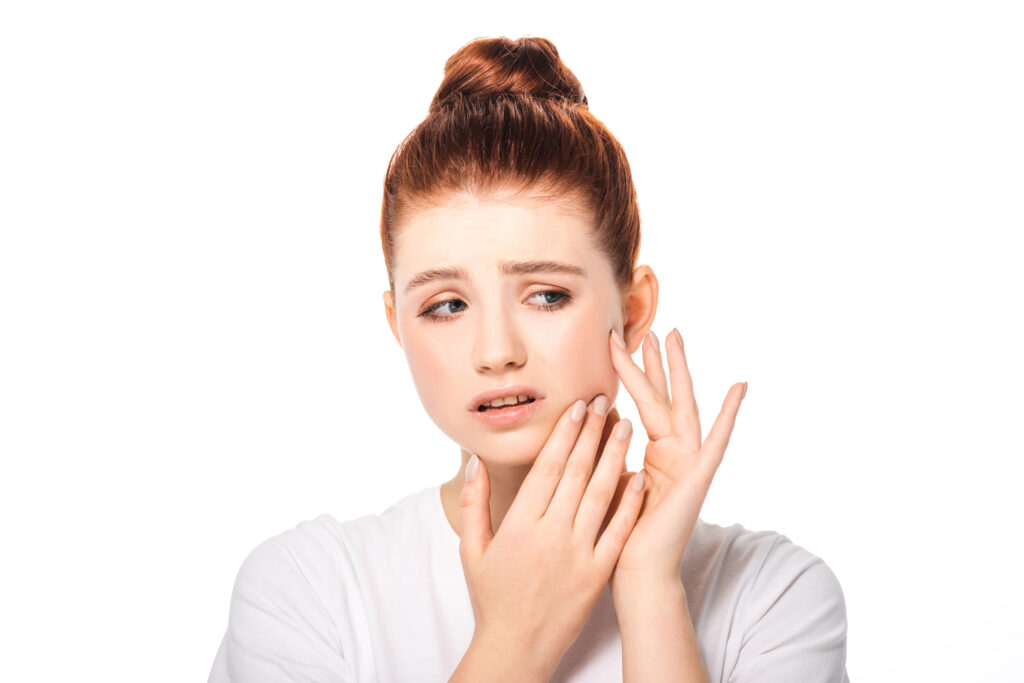
For girls, this can show up as elaborate skincare routines, expensive products, facial tools and a growing preoccupation with pores, texture, “glass skin,” puffiness and jawline definition.
I recently heard that young girls (even ten year olds) are buying products such as “Drunk Elephant” ($96 for 50ml) for their skin care routine and it’s become a “status symbol”!
Meanwhile, jade rollers, gua sha tools and endless before-and-after videos showing you how you need to massage your face to prevent wrinkles and create glowing perfect skin are popular with the tweens and teens, who don’t even have wrinkles yet!
Now, youthful skin is a project that needs constant work to be maintained.
For boys, the pressure can be very similar. Online “looksmaxxing” communities often focus on jaw width, cheekbones, facial symmetry, height, hairlines and other physical features. Some boys encounter jaw exercisers or “mewing” content or choose to buy jaw exercisers! At the extreme end is the alarming trend called “bone smashing,” in which they intentionally strike facial bones in the unsupported belief that healing will create a more sculpted face.
How Taking Care of Ourselves Has Turned into Constant Surveillance and Obsessing
It can be positive to care for your skin, and there’s nothing drastically wrong with enjoying beauty products or wanting to look your best. The teen years have often included experimentation with appearance. However, the concern I have now is that normal grooming has turned into obsessing – checking, measuring, comparing and trying to correct tiny or imagined flaws, leading you to feel really bad about yourself.
One might begin with, “This moisturizer smells nice,” and gradually move toward, “My pores are too big.” Studying fitness content might lead to studying one’s jaw and whether it has the “right” angle. The shift can be subtle, and we need to look out for it.
Cleveland Clinic describes Looksmaxxing as an appearance-focused online subculture that can amplify adolescents’ insecurity and, at its more extreme end, include dangerous practices. It specifically identifies bone smashing as a form of self-injury with no evidence that deliberately injuring the face will create the promised chiseled bone structure.
Your child does not have to search for this content!
We often imagine internet risk as something a child has to go looking for but that is no longer how much of the online world works.
A child who watches one video about clearing acne, improving a hairstyle, getting fit or changing a jawline can be offered related material without ever typing in words such as “looksmaxxing” or “body dysmorphia.”
Instagram has strengthened Teen Accounts and now places teens into age-appropriate content settings by default. That is a positive development, but no filtering system can remove every appearance pressure. Much of the content we are talking about does not initially look “dangerous.” A skincare tutorial, a facial massage, a fitness Reel or a video about becoming more attractive may pass easily as ordinary lifestyle content, and then take over their feed.
Why 13 is such a vulnerable age to have internet and social media access.
At age 13, they are developing identity, belonging and self-concept at the same time that their bodies and faces are changing rapidly. Pimples appear, facial shape changes, weight shifts, hair changes, friends become more important, romantic interest might begin and comparison intensifies.
Now place social media in the mix beside that developmental vulnerability. If a young person pauses on a video about a sharper jawline, perfect skin or a “glow-up,” the technology may learn that appearance content holds their attention. What begins as curiosity can become a stream of increasingly specific messages about what is supposedly wrong with their face and what they should buy, do, exercise, massage or change.
We need to be wondering… “What is the algorithm repeatedly teaching my child to notice about themselves?”
Because social media rewards dramatic transformations, young people can get the impression that ordinary development is not enough. They are not simply growing into their faces anymore, instead they are being encouraged to manufacture them.
What the Canadian statistics reveal…
This appearance pressure is unfolding alongside a very real rise in serious eating-disorder problems among Canadian children and teens.
A Canadian study examining the COVID-19 period found eating-disorder hospitalization rates were 66% higher among females and 47% higher among males than before the pandemic, with much of the increase among girls aged 12 to 17.
And there is an important social-media connection. Statistics Canada studied 13,600 Canadian adolescents aged 12 to 17 and found that more frequent social-media use was associated with elevated eating-disorder symptoms in both girls and boys. Even after researchers accounted for sleep and cybervictimization, the association with eating-disorder symptoms remained. The study also noted that 15% of boys showed elevated eating-disorder symptoms – an important reminder that this is not just a problem with one gender.
Do you know about Body Dysmorphic Disorder? (BDD)
Body dysmorphic disorder, or BDD, is different from simply feeling insecure about an occasional pimple or wishing you looked different in a photograph. It involves a persistent and distressing preoccupation with perceived flaws in appearance that may be minor or not noticeable to other people.
We can imagine that repeated appearance comparison, checking and highly curated or filtered images can intensify body-image concerns which are exactly the habits that concern me when a young person’s feed becomes increasingly focused on perfect skin, facial symmetry, jawlines and “fixing” perceived flaws.
Of course it’s completely fine to have a jade roller and enjoy its relaxation effects but we do need to monitor to see if it’s becoming an obsession in hopes of helping ones jaw become more defined.
What Can We Do As Parents?
- Get curious not furious and get curious before you criticize. Ask your child what they are seeing and what they think about it. “What kinds of appearance videos are showing up for you lately?” This is an invite for communicating versus “That stuff is ridiculous.”
- Look at the feed, not just the search history. Ask your teen to show you their YouTube home page, Shorts, Instagram Explore page or Reels. This is really important as the recommendations may tell you more than their searches do.
- Teach them how algorithms work. Kids need to understand that a feed is not a neutral reflection of reality. It is a personalized stream designed in part around what captures and holds their attention and their gender and age that they entered when they signed up for their social media account.
- Watch for increasing self-scrutiny. Repeated mirror checking, photographing the same feature, measuring facial proportions, comparing jawlines, asking for repeated reassurance or becoming distressed about a small perceived flaw deserves attention.
- Separate hygiene from perfection. A simple, age-appropriate skincare routine can be healthy. A ten-step routine driven by fear of normal pores, texture or aging is something different.
- Talk about marketing. A child who believes they have a problem becomes a very good customer. Help kids notice when insecurity is being created and then paired with a product that promises to solve it.
- Set limits around harmful content. Use teen account protections, parental supervision tools and “not interested” controls where appropriate. For younger teens especially, parents should stay involved rather than assuming YouTube, Instagram, TikTok is automatically safe because the content looks mainstream.
- Change the messaging. Keep returning to function and character. Bodies and faces are for living, communicating, laughing, thinking, connecting and experiencing the world. We are not supposed to be obsessively analyzing our faces or endlessly being evaluated from the outside.
Important question to ask your child:
“Has your feed ever made you notice something about your face or body that you had never worried about before?”
That question gets to the heart of the issue. Our children may believe they are simply choosing what to watch, but their feeds are also choosing what to show them. Over time, repeated images and messages can shape what they believe is normal, attractive and worth worrying about.
We cannot remove every appearance message from our children’s world, nor should our goal be to make them afraid of skincare, makeup, fitness or social media. Our job is to help them develop a strong enough internal compass that they can recognize when self-care has crossed over into self-criticism.
We want our children to know that how they look is only one small part of who they are.
I always encourage parents to delay on giving their child a smartphone for as long as possible, as once they have the internet in the palm of their hand, all of this and more becomes accessible.
Warmly,
Sharon
PS. Registration is now open for my next round of Online Self-Empowerment Groups for kids ages 7-9yrs. and 10-12yrs. In these groups, I lead conversations and teach content connected to self-worth, self-confidence, setting boundaries, navigating friendships, identifying their values, growth mindset, and self-regulation. You can find out more and register here.
Want to Connect?
Subscribe now to receive free weekly parenting tips and inspiration.